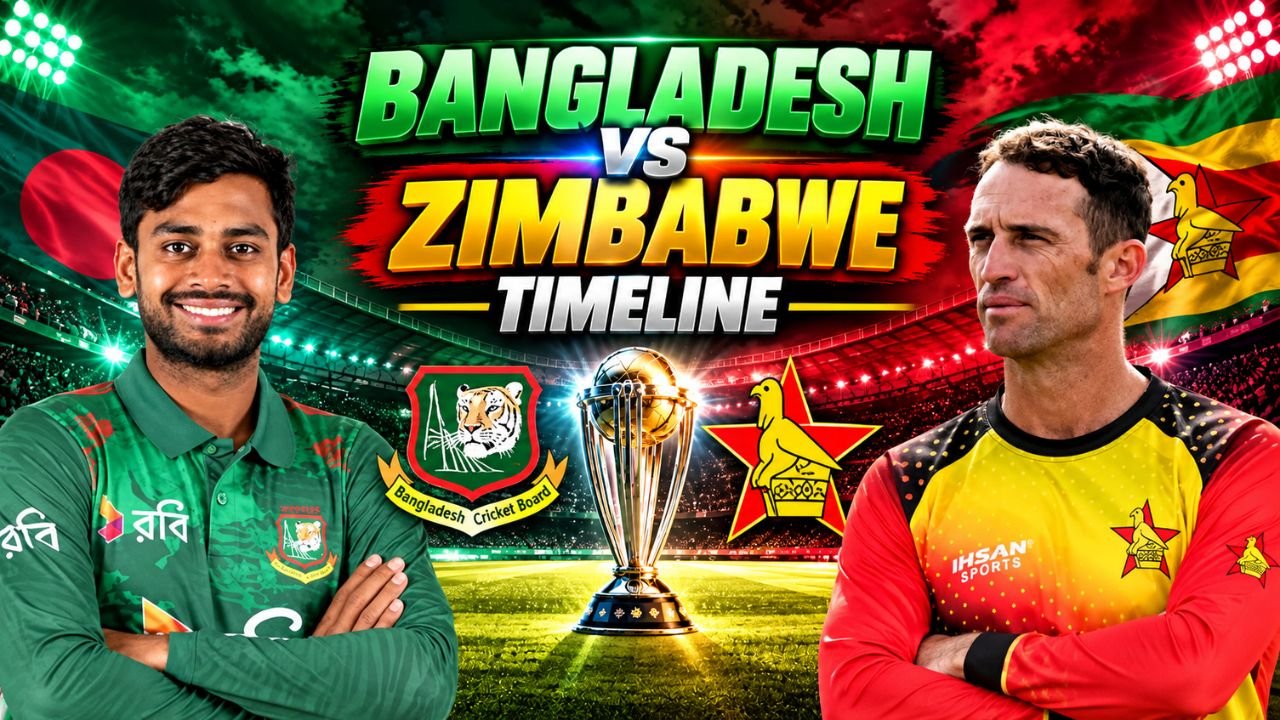
Cricket has plenty of long-running contests between the big names, but the bangladesh national cricket team vs zimbabwe national cricket team timeline has a charm of its own. It is the story of two sides who joined the Test family at almost the same stage, fought for respect through years of heavy defeats, and slowly turned every meeting into a proper contest. What began as a one-sided Test series in Zimbabwe in 2001 has become a full three-format rivalry played across Tests, ODIs and T20Is. Along the way, BAN vs ZIM cricket has produced some memorable names, from Andy Flower and Heath Streak in the early years to Shakib Al Hasan, Mushfiqur Rahim, Brendan Taylor and, more recently, Sikandar Raza.
This piece walks through the complete story of bangladesh vs zimbabwe cricket: how the rivalry began, how the balance of power moved from one side to the other, what happened in the dramatic 2026 series in Harare and Bulawayo, and where things stand as both teams get ready for the Afghanistan Tri-Nation Series in Abu Dhabi, which begins with a Bangladesh vs Zimbabwe ODI on October 17, 2026.
The First Chapter: 1997 and the Opening Meetings
The bangladesh national cricket team vs zimbabwe national cricket team timeline starts in one-day cricket. The two sides first met in an ODI at the Gymkhana Club Ground in Nairobi, during the 1997 President’s Cup, where Zimbabwe won by 48 runs. Bangladesh were still an associate side at that stage, playing the kind of tournaments that would eventually lead them to full membership.
The Test story began in April 2001, when Bangladesh, only a few months into their Test journey, toured Zimbabwe for a two-match series. Zimbabwe, with a seasoned line-up built around the Flower brothers and Heath Streak, won both matches comfortably. At Queens Sports Club in Bulawayo they won by an innings and 32 runs, and at Harare Sports Club they finished the job by eight wickets.
| Test | Venue | Result |
| 1st Test | Bulawayo | Zimbabwe won by an innings & 32 runs |
| 2nd Test | Harare | Zimbabwe won by 8 wickets |
Even though both teams were still finding their feet at the top level, this zim vs ban meeting set the template for the early years: an experienced Zimbabwe unit testing a young Bangladesh side that was still learning how to survive five days of Test cricket.
Bangladesh Learns the Hard Way: 2001 to 2004
The next few years tilted firmly towards Zimbabwe. Bangladesh were going through a painful learning period, and between 2001 and 2004 they lost 21 consecutive Tests, a record at the time. A good share of those defeats came against sides like Zimbabwe, who still had enough quality in their batting and bowling to punish mistakes.
For Bangladesh, these were years of building from nothing. Young players such as Habibul Bashar, Mohammad Ashraful and Mohammad Rafique carried the burden, while the country’s cricket board slowly built the domestic structure that would one day produce a far stronger team.
January 2005: The Win Bangladesh Had Waited For
Nothing reshaped the bangladesh national cricket team vs zimbabwe national cricket team timeline quite like the Chittagong Test in January 2005. Bangladesh beat Zimbabwe by 226 runs, which was their first-ever Test win and brought an end to the long losing streak. For a team that had spent four years being written off, it was a moment of relief and belief.
This ban vs zim result did more than hand Bangladesh a scoreline. It showed the cricket world, and more importantly the players themselves, that they could win at this level. For Zimbabwe, whose cricket was already starting to suffer from off-field problems and the loss of senior players, it was an early sign that the balance in zim vs ban cricket would not stay with them for long.
Zimbabwe Returns to Test Cricket: 2011
Zimbabwe stepped away from Test cricket in 2006 and spent nearly six years rebuilding. When they came back in August 2011, the opponent was Bangladesh, and the venue was Harare Sports Club. Zimbabwe won that comeback Test by 130 runs, with Brendan Taylor named Player of the Series, and they also took the five-match ODI series 3-2.
It was one of the proudest moments in modern Zimbabwean cricket, and it showed that the bangladesh vs zimbabwe contest was now genuinely two-way. A team that many had written off had come back and won on its first attempt.
2013: Bangladesh’s Biggest Test Win
Bangladesh answered in April 2013 with one of the most dominant performances in the history of the rivalry. At Harare, they won the Test by 335 runs, the heaviest defeat Zimbabwe have ever suffered in a Test against any side by runs, according to their record books.
Zimbabwe did gain a consolation in the same tour. They won the third ODI on May 8, 2013, but that win turned out to be a rare one. After that day, Bangladesh won 19 straight limited-overs meetings between the two sides before Zimbabwe finally broke the pattern in 2022.
2018 to 2021: Sylhet, Mirpur and Harare
The next few years were a mix of spectacular wins and one-sided series.
- 2018, Sylhet and Dhaka: Zimbabwe won the first Test in Sylhet by 151 runs, bowling Bangladesh out for 143 and 169 while chasing a big target. Bangladesh hit back in Dhaka with a win by 218 runs, and the series was shared 1-1.
- 2020, Mirpur: Bangladesh piled up 560/6 declared, with Mushfiqur Rahim scoring an unbeaten double century, and won by an innings and 106 runs.
- 2021, Harare: Bangladesh toured Zimbabwe and won the Test by 220 runs, with Mahmudullah scoring 150 not out and Liton Das 95. They also won the ODI series 3-0, with Shakib Al Hasan named Player of the Series, and took the T20I series 2-1.
Taken together, these results showed a pattern that would repeat: Zimbabwe could win a game if things went right, but Bangladesh had the depth to dominate over a whole series.
2022: Sikandar Raza Turns the Tables
Few years capture the unpredictability of bangladesh vs zimbabwe cricket better than 2022. Bangladesh toured Zimbabwe in July and August, and for the first time in a long while, the hosts came out on top in both white-ball series.
- T20I series: Zimbabwe won 2-1, their first T20I series win over Bangladesh, which also ended a run of 19 straight limited-overs defeats against them.
- ODI series: Zimbabwe won 2-1, chasing 304 in the first game and 291 in the second, both by five wickets. Bangladesh won the third by 105 runs.
- Player of the Series (both): Sikandar Raza
Later that year, the teams met at the T20 World Cup in Hobart, where Bangladesh won a nail-biter by three runs (150/7 to 147/8).
2024 and 2025: Bangladesh Take Control Again
In May 2024, Zimbabwe toured Bangladesh for five T20Is, and the hosts won the series 4-1. Bangladesh won the opening game by eight wickets, the second by six wickets, the third by nine runs and the fourth by five runs, while Zimbabwe took the dead rubber by eight wickets.
In April 2025, Zimbabwe returned for a two-Test series, and it was a thrilling one.
- 1st Test, Sylhet: Zimbabwe won by three wickets, chasing a tricky target on the final day.
- 2nd Test, Chattogram: Bangladesh won by an innings and 106 runs, scoring 444 and bowling Zimbabwe out for 227 and 111.
The series ended 1-1, which was a fair reflection of how close the two sides had become in the longest format.
June to July 2026: Zimbabwe’s Famous Tour of Harare and Bulawayo
The most recent chapter of the bangladesh national cricket team vs zimbabwe national cricket team timeline was played from June 28 to July 19, 2026, in Zimbabwe. Bangladesh arrived without several first-choice players, while Zimbabwe, coming off a historic T20 World Cup in which they reached the Super Eight stage for the first time with wins over Australia and Sri Lanka, were in a confident mood.
The Only Test: Harare, June 28-30
Zimbabwe produced the biggest Test win in their history, beating Bangladesh by an innings and 85 runs inside three days.
- Bangladesh, 1st innings: 140 (Mominul Haque 60, Newman Nyamhuri 4/61, Richard Ngarava 2/18)
- Zimbabwe, 1st innings: 410 (Innocent Kaia 140, Wessly Madhevere 77*, Taijul Islam 7/138)
- Bangladesh, 2nd innings: 185 (Mushfiqur Rahim 34, Blessing Muzarabani 4/65, Ngarava 3/32)
Innocent Kaia, who made his maiden Test hundred, matched Bangladesh’s entire first innings on his own with 140 and was named Player of the Match. Taijul Islam’s seven-wicket haul was the only real bright spot for the visitors.
The ODI Series: Zimbabwe Win 2-1
| ODI | Venue | Date | Result |
| 1st ODI | Harare | July 6 | Zimbabwe won by 25 runs (ZIM 141, BAN 116) |
| 2nd ODI | Harare | July 9 | Zimbabwe won by 13 runs (ZIM 247/6, BAN 234) |
| 3rd ODI | Harare | July 11 | Bangladesh won by 7 wickets (ZIM 199, BAN 200/3) |
The first ODI was a low-scoring thriller in which Bangladesh’s Nahid Rana took 6/21 in a losing cause, but Ngarava and the Zimbabwe seamers did enough to defend 141. The second ODI was the real classic. Ben Curran scored an unbeaten 111 and Brad Evans added 58 not out in a 99-run seventh-wicket partnership, and Bangladesh then lost 7 wickets for 65 runs while chasing 248. Captain Richard Ngarava took the final wicket, that of Mehidy Hasan Miraz, to seal the series. Bangladesh won the third ODI comfortably thanks to Tanzid Hasan’s 94 and a four-wicket haul from Shoriful Islam, but the series was already lost. Brad Evans was named Player of the Series.
The T20I Series: Bangladesh Win 2-1
| T20I | Venue | Date | Result |
| 1st T20I | Bulawayo | July 15 | Zimbabwe won by 32 runs (ZIM 170/6, BAN 138) |
| 2nd T20I | Bulawayo | July 17 | Bangladesh won by 34 runs (BAN 186/5, ZIM 152) |
| 3rd T20I | Bulawayo | July 19 | Bangladesh won by 4 wickets (ZIM 143/7, BAN 144/6) |
Zimbabwe started the T20Is strongly, with Blessing Muzarabani taking 4/17 and Brian Bennett scoring 44. Bangladesh levelled the series in the second game and then won a dramatic decider. Dion Myers scored 73 for Zimbabwe in the third T20I, but Bangladesh, who were without Mustafizur Rahman and Shoriful Islam for the whole series, chased down 144 with two balls to spare. Opener Tanzid Hasan finished with an unbeaten 66 and won both the Player of the Match and Player of the Series awards, with 140 runs across the three games. Zimbabwe captain Sikandar Raza, aged 40, dismissed both Parvez Hossain Emon and Towhid Hridoy, but it was not enough.
It was a tour that summed up the modern state of this contest: Zimbabwe were stronger at home in the longer formats, while Bangladesh’s T20 depth still counted in the shortest.
Head-to-Head: The Numbers So Far
The scoreline of zim vs ban cricket looks quite different depending on the format, because Bangladesh’s advantage is strongest in the white-ball games, while Tests are almost level.
| Format | Total Matches | Bangladesh Wins | Zimbabwe Wins | Draws / No Result |
| Tests | 21 | 9 | 9 | 3 draws |
| ODIs | 84 | 52 | 32 | – |
| T20Is | 28 | 19 | 9 | – |
The takeaway is simple: Bangladesh lead comfortably in ODIs and T20Is, but the Test head-to-head is dead level, with Zimbabwe having won two of the last three Tests between the sides, including the 2026 innings win in Harare. The T20I rivalry began on November 28, 2006, when Bangladesh won a one-off game in Khulna by 43 runs.
Memorable Moments Worth Remembering
Beyond the headline series, a handful of individual matches have stayed with fans long after the scorecards were filed away.
- 1997, Nairobi: The first ODI meeting, won by Zimbabwe by 48 runs
- 2001, Bulawayo and Harare: Zimbabwe’s two Test wins in Bangladesh’s first Test series against them
- 2005, Chittagong: Bangladesh’s first-ever Test win, by 226 runs, over Zimbabwe
- 2011, Harare: Zimbabwe’s comeback Test win by 130 runs after six years away
- 2013, Harare: Bangladesh’s 335-run victory, the biggest Test margin between the sides
- 2018, Sylhet: Zimbabwe’s 151-run win, in which they bowled Bangladesh out for 143 and 169
- 2020, Mirpur: Bangladesh’s 560/6 declared, the highest total in the rivalry
- 2022, Harare: Sikandar Raza’s series-winning performances in both white-ball formats
- 2025, Sylhet: Zimbabwe’s three-wicket Test win on the final day
- 2026, Harare: Innocent Kaia’s 140 and Zimbabwe’s biggest Test win, by an innings and 85 runs
Each of these moments belongs to a different era of the rivalry, yet together they explain why the contest still carries so much weight whenever the two sides meet.
The Players Who Built This Rivalry
Few rivalries between teams at this level can boast a list of names quite like this one.
Bangladesh Legends
- Shakib Al Hasan – one of the world’s greatest all-rounders
- Mushfiqur Rahim – the backbone of Bangladesh’s Test batting for two decades, with a double century against Zimbabwe
- Tamim Iqbal – the aggressive opener who led the team in ODIs
- Mahmudullah – a match-winner with a 150 not out at Harare in 2021
- Mohammad Rafique – the left-arm spinner who played a key role in the 2005 win
- Mashrafe Mortaza – the fast bowler and long-time captain
- Taijul Islam – the left-arm spinner, with 7/138 in the 2026 Harare Test
Zimbabwe Legends
- Andy Flower and Grant Flower – the batting architects of Zimbabwe’s early Test years
- Heath Streak – the bowler and captain who led the team through its best era
- Brendan Taylor – the stylish batter who starred in the 2011 comeback
- Hamilton Masakadza – a calm, reliable opener across formats
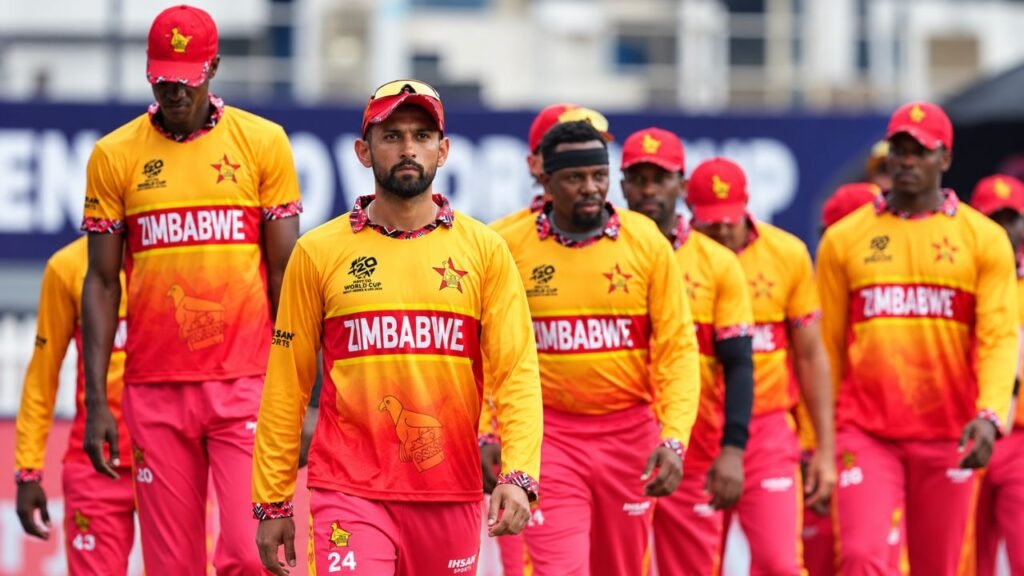
- Sikandar Raza – the all-rounder who has defined Zimbabwe’s modern white-ball cricket
- Blessing Muzarabani – the tall fast bowler who leads the attack with the red ball and white ball
These are the players who turned bangladesh vs zimbabwe contests into must-watch cricket for generations of associate and emerging fans.
Why Conditions Have Always Played a Role
Conditions have shaped zim vs ban cricket from the very start. In Bangladesh, venues like Mirpur, Chattogram and Sylhet have traditionally helped spin and rewarded patience, while in Zimbabwe, Harare and Bulawayo offer more pace and bounce, particularly for the seamers early in the day. The 2026 Harare Test showed this clearly, when Zimbabwe’s pace attack bowled Bangladesh out for 140 on a surface that rewarded discipline.
That is also why comparing the 2001 Tests to the 2026 matches needs a bit of care. Pitch preparation, fitness standards, analytics and coaching have all changed enormously, and the neutral venues now used for series like the one in Abu Dhabi add yet another variable for both teams.
How the Format Mix Has Evolved
Cricket itself has changed shape several times over the course of this rivalry, and each shift left its mark on how the two teams approached each other.
- In 1997, the contest began with a one-day tournament in Nairobi
- In 2001, Test cricket became the main arena
- From 2006, T20 cricket added a fast, unpredictable format
- After 2011, Zimbabwe’s return to Tests made the rivalry a proper two-way contest
- The 2020s have produced two-Test series, all-format tours and, now, neutral tri-nation events
Every one of these phases still shapes how fans and analysts talk about the contest today.
Looking Ahead: The Afghanistan Tri-Nation Series in Abu Dhabi
The bangladesh national cricket team vs zimbabwe national cricket team timeline adds its next entry on Saturday, October 17, 2026, when the two sides open the Afghanistan Tri-Nation ODI Series at Zayed Cricket Stadium in Abu Dhabi. Afghanistan are the third team, and the three sides play each other once before the top two meet in the final on October 23.
| Date | Match | Venue |
| October 17 | Bangladesh vs Zimbabwe | Abu Dhabi |
| October 19 | Afghanistan vs Zimbabwe | Abu Dhabi |
| October 21 | Afghanistan vs Bangladesh | Abu Dhabi (Sharjah per some listings) |
| October 23 | Final | Abu Dhabi |
All matches are scheduled for 5:00 PM local time in Abu Dhabi, which is 6:30 PM in India and 2:00 PM in the UK.
| Squad | Captain | Notable Players |
| Bangladesh | Litton Das (wk) | Towhid Hridoy (vc), Tanzid Hasan, Najmul Hossain Shanto, Mehidy Hasan Miraz, Taskin Ahmed, Mustafizur Rahman, Hasan Mahmud, Shoriful Islam, Aliss Al Islam |
| Zimbabwe | Sikandar Raza | Ben Curran, Brian Bennett, Craig Ervine, Brendan Taylor (wk), Wessly Madhevere, Blessing Muzarabani, Brad Evans, Newman Nyamhuri |
Litton Das returns as Bangladesh’s ODI captain, taking over from Mehidy Hasan Miraz, while 29-year-old Aliss Al Islam has been called up. Zimbabwe will again be led by Sikandar Raza, as Richard Ngarava, who captained the side to the Test and ODI wins in July, is recovering from a back injury. Zimbabwe also come into the series after pushing Australia to the limit in their home ODI series last month, while Bangladesh have just drawn a Test with Afghanistan in the UAE.
The squads blend seasoned campaigners with younger players who have come through domestic and franchise cricket, a pattern that is likely to define ban vs zim cricket for the next few years as both boards plan ahead for future World Cup cycles.
Why This Rivalry Still Draws Crowds
Few contests at this level connect as many generations of players as bangladesh vs zimbabwe cricket does. Follow the thread and you move from the Flower brothers and Habibul Bashar, to Streak and Rafique, to Taylor, Masakadza, Shakib and Mushfiqur, and finally to Raza, Kaia, Tanzid Hasan, Towhid Hridoy and the players coming through today.
The two boards also represent very different cricketing pathways. Bangladesh’s strength is built on a deep spin tradition, a passionate home crowd and a franchise league that feeds players into the national side. Zimbabwe’s strength comes from a smaller pool of players, a strong seam attack and a handful of match-winners who can change a game on their own. That contrast is exactly what keeps zimbabwe vs bangladesh fixtures worth watching, no matter which format is being played.
The Role of Domestic Cricket and Franchise Leagues
Part of why Bangladesh’s side of this rivalry looks so different today comes down to structure. A regular domestic season and the Bangladesh Premier League have given the national team a talent pipeline and a level of match experience that did not exist two decades ago. Young batters and bowlers now arrive in the national set-up having already played under pressure, in front of big crowds, against high-quality overseas players.
Zimbabwe, working with a smaller player base and fewer resources, has taken a different route. They lean on the Logan Cup and their domestic 50-over competition to develop talent, on players who gain experience in franchise leagues around the world, and on a small group of genuine match-winners. Neither approach is right or wrong; they are simply two different ways of building a competitive side, and that difference shows up clearly whenever the two teams meet.
Closing Thoughts
The bangladesh national cricket team vs zimbabwe national cricket team timeline runs from a one-sided Test series in Bulawayo and Harare in 2001 to a fully competitive, three-format rivalry heading into the Abu Dhabi tri-series. Zimbabwe won the early meetings, Bangladesh’s first Test win in 2005 changed that relationship, and the years since have seen the two teams trade blows, with Bangladesh stronger in white-ball cricket and Zimbabwe increasingly dangerous at home in the longest format.
As both sides get ready for October 17, the story of zim vs ban cricket keeps moving forward, proof that this rivalry is not frozen in the past but is still very much being written.
Check Also: Sanju Samson | Shivam Dube | Washington Sundar | MS Dhoni
FAQs
The first ODI was in Nairobi in 1997, and the first Test series was in Zimbabwe in April 2001, which Zimbabwe won 2-0.
The Test record is level at 9 wins each from 21 Tests, with 3 draws.
Bangladesh lead the ODI record 52-32 from 84 matches, though Zimbabwe won the 2026 series 2-1.
Bangladesh lead 19-9 from 28 T20Is. The first was in Khulna in November 2006.
The innings-and-85-run win in the one-off Test at Harare on June 30, 2026
Innocent Kaia made 140 on his way to the Player of the Match award.
Bangladesh won 2-1 in Bulawayo, with Tanzid Hasan named Player of the Series.
Saturday, October 17, 2026, in Abu Dhabi, as the opening game of the Afghanistan Tri-Nation ODI Series.
Litton Das captains Bangladesh, and Sikandar Raza leads Zimbabwe while Richard Ngarava recovers from injury.
Yes, they lead the T20I and ODI records, though Zimbabwe have won recent ODI series and are never easy to beat.
Source: CricInfo