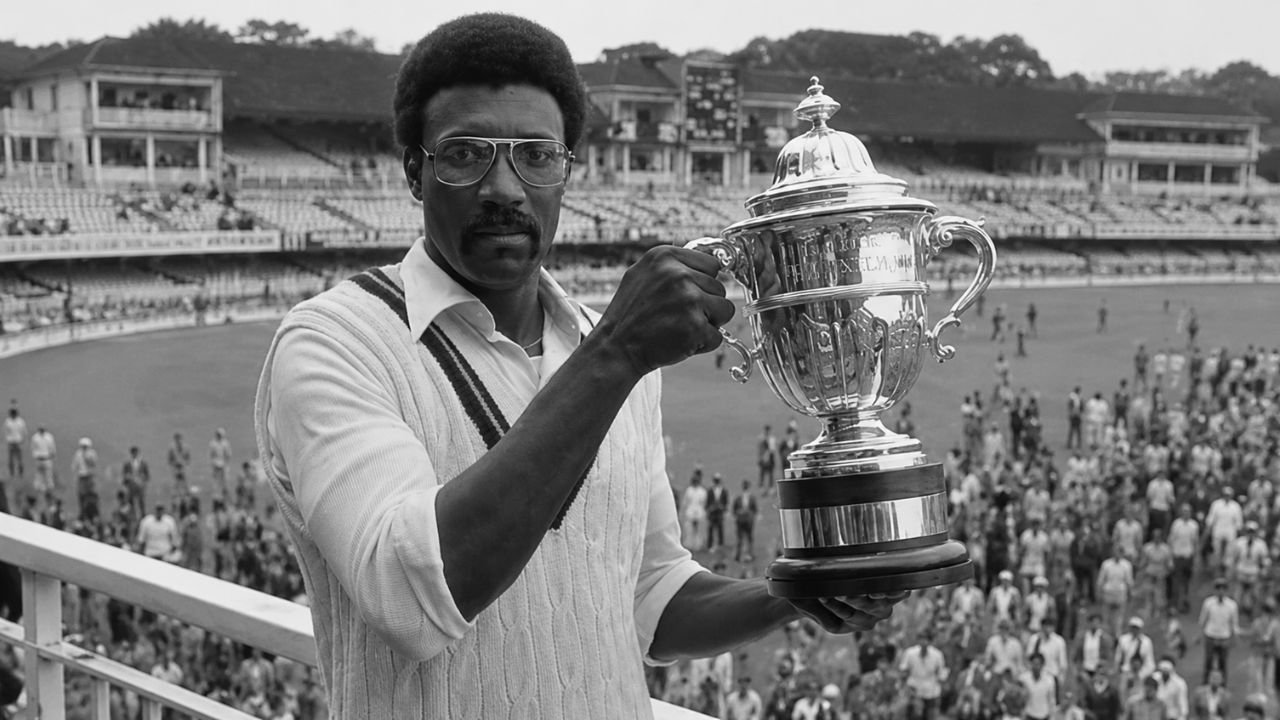
Sir Clive Lloyd stands among the most influential figures in cricket history. The former West Indies captain changed the direction of international cricket with his powerful batting, fearless leadership, and smart tactical decisions. During his captaincy era, the West Indies became the most dominant Test team in the world and created a winning legacy that lasted for years.
This article covers his complete journey, including his early struggles, cricket career, leadership achievements, personal life, career records, Clive Lloyd stats, estimated wealth, controversies, and lesser-known facts. It also explains clive lloyd age, his current status, and why cricket experts still consider him one of the greatest captains of all time.
Quick Profile of Sir Clive Lloyd
| Profile Attribute | Information |
| Full Name | Sir Clive Hubert Lloyd |
| Date of Birth | August 31, 1944 |
| Clive Lloyd Age | 81 years old (as of 2026) |
| Birthplace | Queenstown, Georgetown, British Guiana (now Guyana) |
| Nationality | Guyanese |
| Nicknames | Big C, Hubert |
| Role | Middle-order batter and occasional medium-pace bowler |
| Batting Style | Left-handed |
| Bowling Style | Right-arm medium pace |
| Zodiac Sign | Virgo |
| Famous For | Leading West Indies during their golden era |
| Knighted | 2020 for services to cricket |
Who Is Sir Clive Lloyd?
Sir Clive Hubert Lloyd is a former West Indies cricketer who played as a left-handed middle-order batsman and occasional right-arm medium pace bowler. He represented the West Indies from 1966 to 1985 and became the captain who transformed the team into an unstoppable cricketing force.
Lloyd was born in Georgetown, British Guiana (modern-day Guyana) and experienced financial problems in his childhood but worked on his abilities in cricket. The success of an international cricket icon coming out of a young boy and limited resources demonstrates perseverance and character.
During his tenure, West Indies won the first two ICC World Cups in cricket in 1975 and 1979. He also developed one of the most dreaded bowling attacks in the history of the game of cricket by encouraging fast bowlers who ruled all other bowlers in the world.
Early Life and Childhood Struggles
Clive Lloyd was born in Georgetown, Guyana, and was hooked on cricket at an early age. His family was financially struggling, and his father was a chauffeur to provide sustenance to the family.
In 1958, a big twist occurred as Lloyd lost his father at the early age of 14. He dropped out of school and took a hospital clerk job to take care of his mother and siblings due to family life.
Despite these hardships, Lloyd persisted in playing cricket. He played on behalf of Chatham High School and acquired the abilities that would later on enable him to become a professional cricketer. He was shaped by the early adversities, and this molded his disciplined character when he managed to cope with pressure in his international career.
Cricket Career Journey: From Debut to International Greatness
In December 1966, Lloyd debuted in Tests playing against India in Mumbai. Firstly, he demonstrated his potential by scoring 82 and 78 not out on his debut. This aggressive batting style soon established him as being among the most dependable middle-order players for the West Indies.
He was a huge success with Lancashire County Cricket Club in England, along with international cricket. His county cricket experience made him a better player as he performed better in his games.
Lloyd played over 500 games for West Indies in various formats over the course of 20 years and established a legend as a strong batsman who was able to alter the game through his aggressive style of play.
The Rise of a Dominant West Indies Team
In 1974, the West Indies had star players, but they were not fully dominating when Lloyd was made the captain. He revolutionized the team strategy by emphasizing fitness, discipline, and aggressive fast bowling.
Lloyd came up with a new strategy following the 1975– 76 disastrous series with Australia. Rather than relying on spin bowling, he instituted a four-pronged fast bowling assault, which took the West Indies to its glory.
Quick bowlers like Andy Roberts, Michael Holding, Joel Garner and Colin Croft became synonymous with West Indies might. They were fast, precise, and aggressive, contributing to the defeat of the opponents of the given team all over the world.
Clive Lloyd Stats: Complete Batting and Fielding Records
Career statistics below demonstrate the contributions which Lloyd made as a batsman in international and domestic cricket. His leadership performance, match-winning skills, coupled with his consistency, made him one of the most admired players of his time.
| Format | Matches | Innings | Not Outs | Total Runs | High Score | Average | 100s | 50s | Catches |
| Test Matches | 110 | 175 | 14 | 7,515 | 242* | 46.68 | 19 | 39 | 90 |
| ODIs | 87 | 69 | 1 | 1,977 | 102 | 39.54 | 1 | 11 | 39 |
| First-Class | 490 | 730 | 96 | 31,232 | 242* | 49.26 | 79 | 172 | 377 |
| List A | 378 | 343 | 7 | 10,915 | 134* | 40.28 | 12 | 69 | 146 |
Bowling Records and All-Round Contribution
In addition to the batting and captaincy performances that led to the fame of Lloyd, he also provided a medium pace right arm, bowling. The statistics of his bowling demonstrate his capability of helping the team when needed.
His contributions as a bowler were not as substantial as batting but brought advantageous breakthroughs in vital circumstances and brought balance to the team members.
| Format | Matches | Innings | Balls Bowled | Total Runs | Wickets | Best Bowling | Average | Economy | Strike Rate |
| Test Matches | 110 | 45 | 1,716 | 622 | 10 | 2/102 | 62.20 | 2.17 | 171.60 |
| ODIs | 87 | 10 | 358 | 210 | 8 | 2/42 | 26.25 | 3.52 | 44.75 |
| First-Class | 490 | 224 | 9,699 | 4,104 | 114 | 4/48 | 36.00 | 2.54 | 85.08 |
| List A | 378 | 77 | 2,926 | 1,958 | 71 | 4/33 | 27.58 | 4.02 | 41.21 |
Captaincy Legacy and World Cup Success
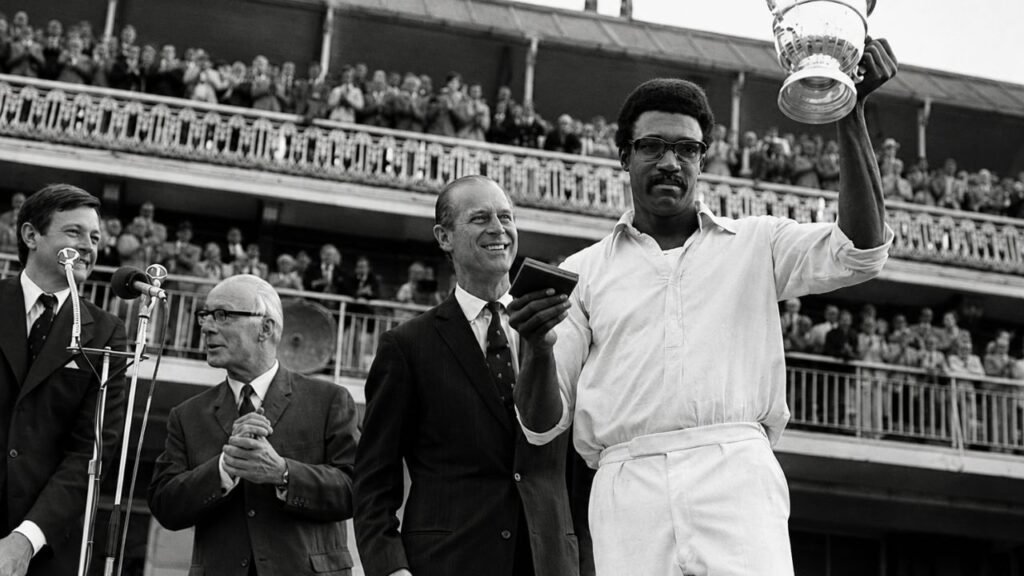
The greatest contribution by Lloyd was as a leader. He established a culture of winning that transformed the way the teams had Team International Cricket.
West Indies was the ruler of Test cricket, and historic successes in One-Day International games were attained in his captaincy. He was a great leader; his power to handle various personalities based in the Caribbean gave him a clear advantage in leadership.
Captaincy Record During International Career
The table below shows Lloyd’s leadership achievements, including his win percentage and major milestones as West Indies captain.
| Format | Matches Led | Won | Lost | Tied | Drawn / NR | Win % | Major Trophies / Streaks |
| Test Matches | 74 | 36 | 12 | 0 | 26 | 48.64% | 27-Match Unbeaten Streak |
| ODIs | 84 | 64 | 18 | 1 | 1 | 76.19% | 2x ICC World Cup (1975, 1979) |
What Made His Playing Style Different From Other Cricketers?
The presence of Sir Clive Lloyd on the field and his forceful style of batting had made him one of the most identifiable cricketers of his generation. He could naturally overpower bowlers because of his tall frame, lengthy reach, and heavy bat with which he responded to speedy bowling.
Lloyd was very strong and placed very well, unlike many batsmen who were largely dependent on timing. He was an effective middle-order batsman who could turn a game around in a few strokes because of his power in hitting and pulling shots.
Physical Profile and Playing Characteristics
| Attribute | Details |
| Height | 6 feet 4 inches (193 cm) |
| Build | Tall, powerful, and imposing frame |
| Batting Style | Left-handed middle-order batsman |
| Bowling Style | Right-arm medium pace |
| Signature Feature | Thick-rimmed glasses |
| Batting Strength | Powerful stroke play and aggressive hitting |
| Leadership Style | Calm, disciplined, and tactical |
| Playing Era | 1960s to 1980s |
His well-known thick glasses were not fashionable. At the age of 12, he had an eye injury when attempting to halt a school fight, a case that permanently impaired his sight. Despite this, he did not give up playing cricket on the highest level and had become a role model to young sportspeople.
Personal Life, Family Background and Relationships
The cricketing icon had a comparatively private life that has remained out of the public eye. He was born and brought up in Guyana by his parents and siblings, and his childhood difficulties in the family influenced his character and attitude towards responsibility.
His father was a driver, and when he died abruptly, Lloyd had to take care of his family when he was at a tender age. The experiences assisted him in cultivating leadership characteristics that would then characterize his cricketing career.
The following table provides an overview of his known family background and personal relationships.
| Family Information | Details |
| Father | Worked as a local doctor’s chauffeur |
| Mother | Supported the family after his father’s death |
| Siblings | Grew up with five siblings |
| Marriage | Married Waveney Lloyd in 1971 |
| Children | Three children, including two daughters and one son |
| Famous Relative | Cousin of West Indies spinner Lance Gibbs |
Outside cricket, Lloyd has shown interest in football and has been a long-time supporter of English Premier League club Everton FC. His connection with English sports developed during his successful county cricket career with Lancashire.
Did Personal Controversies Affect His Public Image?
Despite his well-respected cricketing career, Lloyd at times came into the limelight because of his personal life. In 2008, the most debatable case was when his wife, Waveney Lloyd petitioned to divorce him after over 30 years of marriage.
The British media reported allegations about his personal behavior, as was the case during the marriage. But generally, Lloyd has been discreet with his personal affairs and concentrated more on his work in cricket.
Major Controversies Timeline
| Year | Controversy / Event | Details |
| 2008 | Divorce case | His wife filed for divorce after more than 30 years of marriage |
| 2015 | Selection controversy | Faced criticism during his role as West Indies selection panel chairman |
| 2015 | Chris Gayle criticism | Gayle accused selectors of unfair treatment after senior players were dropped |
As the head of the West Indies selection panel, Lloyd was also accused of being a bad critic due to the omission of older players like Dwayne Bravo and Kieron Pollard in the 2015 ODI World Cup squad. The scenario brought about a debate among fans and ex-players regarding the choices made in terms of selection.
What Is Sir Clive Lloyd’s Estimated Net Worth?
The estimated net worth of Sir Clive Lloyd ranges between $2 million and $5 million. He conserves his finances, so the precise numbers are not available.
The source of his wealth is several cricket-related activities during his career. His income streams aside from contracting related to playing were through commentary, match refereeing, coaching, administration, and appearances at corporations.
Estimated Net Worth Growth (Recent Years)
The following figures represent approximate estimates based on his long cricket career, professional roles, and public appearances.
| Year | Estimated Net Worth |
| 2022 | $2 million – $3 million |
| 2023 | $2 million – $4 million |
| 2024 | $3 million – $4 million |
| 2025 | $3 million – $5 million |
| 2026 | $2 million – $5 million |
Main Sources of Income
| Income Source | Details |
| Professional Cricket | West Indies and Lancashire contracts |
| ICC Roles | Match referee and cricket administration work |
| Commentary | Cricket broadcasting assignments |
| Speaking Events | Corporate and sporting events |
| Administration | Cricket leadership positions |
In contrast to many players of today, Lloyd was able to develop his reputation in a time when cricket salaries were not even half as high as they are nowadays. His lifelong participation in the sport of cricket also enabled him to stay afloat financially in his later years.
Does He Have Official Instagram, Facebook or YouTube Accounts?
Sir Clive Lloyd belongs to an era before social media became a major part of sports branding. Unlike modern cricketers, he does not operate widely recognized verified accounts on platforms such as Instagram, Facebook, X (Twitter), or YouTube.
Many fan pages share his photographs, career highlights, and interviews, but these accounts do not represent his official presence.
Social Media Account Status
| Platform | Official Account Status | Followers |
| No verified official account available | Not applicable | |
| No verified official public page available | Not applicable | |
| YouTube | No official personal channel available | Not applicable |
| X (Twitter) | No verified personal account available | Not applicable |
His limited digital presence reflects his preference for privacy and his traditional approach toward public life.
What Are Some Interesting Facts About His Career?
In addition to his captaincy glory, various special events of his life demonstrate why people still like him. These facts unveil his personality, determination, and contribution to cricket.
1. Fastest Double Century Achievement
In 1976, Lloyd created a remarkable first-class cricket record by scoring a double century against Glamorgan in only 120 minutes. His aggressive batting display remains one of the fastest double hundreds recorded in first-class cricket.
2. Glasses Became His Trademark
Most of the fans recall Lloyd due to his pair of huge glasses. Yet, they were medically required following an injury to the eye as a child, not as a way of fashion.
3. Built The Foundation Of Fast Bowling Dominance
His leadership transformed the approach to cricket. He trusted fast bowlers and fitness, which formed a model that impacted international teams over decades.
4. Successful Lancashire Career
Playing for Lancashire made him popular among the supporters of English cricket and enhanced his affiliation with county cricket.
5. Received Knight Honor
He was awarded a knighthood in 2020 as a result of his exceptional Service to the game of cricket to acknowledge a lifetime of service as a player, captain and administrator.
Why Is His Leadership Considered Revolutionary?
Cricket experts have observed that Lloyd was a captain who transformed the mentality of international cricket. Before his time in power, the West Indies had gifted players, yet they did not have dominance.
He developed a culture of teamwork that is founded on confidence, preparation, and aggression. When he settled on the idea of developing a world-class fast bowling team, this move proved to be one of the biggest tactical adjustments that happened in the history of cricket.
What he accomplished most was to win trophies and establish a system in which the new generations of West Indian cricketers would perpetuate the winning culture.
Frequently Asked Questions
Clive Lloyd age is 81 years in 2026. He was born on August 31, 1944.
His major records include 7,515 Test runs from 110 matches, 19 Test centuries, and leadership of two World Cup-winning teams.
He transformed West Indies into the strongest cricket team in the world through aggressive strategies and exceptional player management.
He won two ICC Cricket World Cups, in 1975 and 1979.
Yes, he played extensively for Lancashire County Cricket Club in England.
He mainly played as a middle-order batsman.
No verified official Instagram, Facebook, YouTube, or X accounts are publicly available.
He received a knighthood in 2020 for his services to cricket.
Final Thoughts
Sir Clive Lloyd’s story represents more than cricket statistics. His career shows how strong leadership, resilience, and strategic thinking can change the history of a sport. From overcoming childhood struggles to building one of cricket’s greatest teams, he created a legacy that continues to inspire players and fans.
His impressive records, captaincy achievements, and contribution to West Indies cricket make him one of the most respected personalities in the game. The numbers behind clive lloyd stats explain his success, but his leadership vision remains his greatest contribution to cricket.